Resin bound driveways in Ireland: cost, pros, cons and what to ask
Everything Irish homeowners need to know about resin bound and composite resin tarmac driveways in 2026 — cost, durability, drainage and how to find a good contractor.
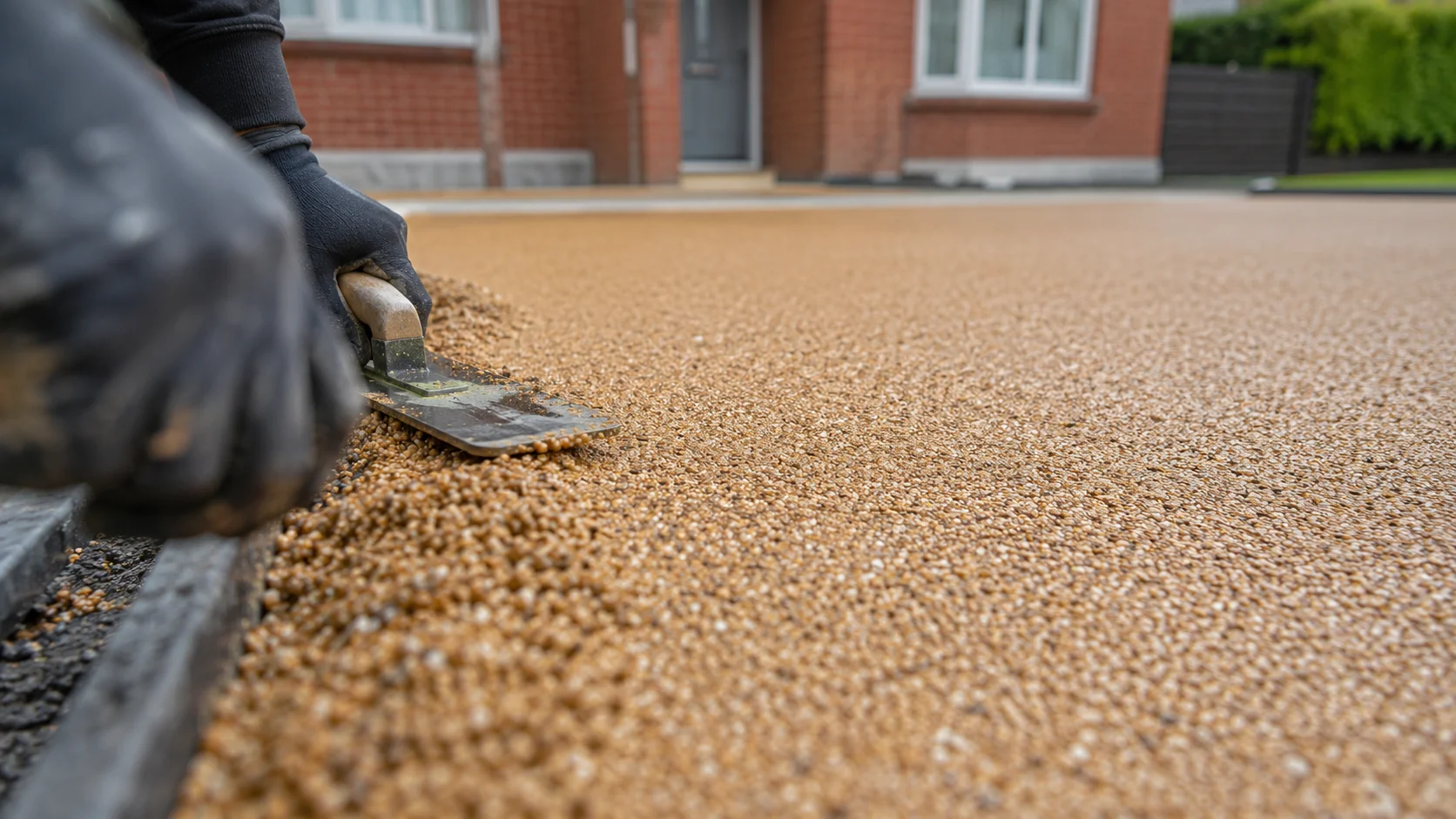
Resin bound driveways have gone from a premium niche to one of the most searched driveway types in Ireland in the space of a few years. A smooth, stone-chip finish that drains naturally, resists weeds and holds its colour — it’s easy to see why homeowners are interested. But it’s also a market with a lot of variation in quality and a few things worth understanding before you get a quote.
Here’s what you need to know.
What is a resin bound driveway?
A resin bound surface is made by mixing natural aggregate — decorative gravel, crushed stone or recycled glass — with a clear UV-stable polyurethane resin, then pouring and trowelling the mixture onto a solid prepared base. The resin coats each stone and binds them together into a smooth, permeable surface.
The finished result is a seamless, textured surface that looks clean and contemporary. Because the resin goes through the aggregate rather than sitting on top, the surface is fully permeable — water drains through the voids between the stones rather than running off into the drains.
Resin bound vs resin bonded: the difference that matters
These two are frequently confused, and the difference is significant.
Resin bound: aggregate mixed into the resin before laying. The stones are fully encapsulated. The surface is permeable. Stones don’t shed. This is the product most homeowners want.
Resin bonded: a layer of resin is applied to the base, then aggregate is scattered onto the wet resin. The stones sit on the surface rather than being embedded in it. The surface is not permeable. Loose stones shed over time, especially at the edges and under tyres. It tends to be cheaper, and it tends to look it after a year or two.
When you’re getting quotes, ask specifically for resin bound, and ask the contractor to confirm the product they’re using is UV-stable and what the aggregate mix is.
What is composite resin tarmac?
A newer product gaining traction in Ireland is composite resin tarmac — sometimes marketed as rubberised tarmac or polymer-modified tarmac. This blends recycled rubber or polymer compounds into the asphalt mix, making it more flexible, more resistant to cracking and slightly better at handling the freeze-thaw cycle that causes Irish tarmac to deteriorate over time.
It sits between standard tarmac and resin bound in terms of cost and appearance. It’s more durable than plain tarmac and significantly cheaper than resin bound, but it doesn’t have the decorative stone finish or the full permeability of a proper resin bound surface. It’s worth asking about if you like the practicality of tarmac but want something that holds up better long-term.
How much does a resin bound driveway cost in Ireland?
Resin bound is the most expensive mainstream driveway surface, and the price reflects the materials and the skill required to lay it properly.
For a standard single-car driveway in Ireland you’re looking at €5,000 to €8,000. A double-width driveway runs €8,000 to €12,000, and larger or more complex projects can go higher.
The biggest cost driver after size is the aggregate. Natural stone and recycled glass aggregates cost more than standard gravel; paler or rarer colour mixes command a premium. Some suppliers offer blends specifically popular in Ireland — warm tones that complement red brick and render rather than the cooler greys more common in the UK market.
The base preparation is the other major variable. Resin bound requires a solid, stable, well-drained sub-base — typically a compacted aggregate layer under tarmac or concrete. If your existing driveway needs to be broken up and removed, or if the ground needs significant work, expect that to add €500 to €2,000 to the quote depending on the scale.
Drainage and SUDS compliance
This is one of the strongest practical arguments for resin bound in Ireland right now.
Local authorities are increasingly requiring that new and replacement driveways satisfy SUDS (sustainable urban drainage system) requirements — meaning rainwater has to drain through the surface or be managed on-site rather than flowing straight to the public drains. Standard tarmac and concrete are not permeable and don’t comply. Resin bound, properly installed over a permeable sub-base, drains fully and meets SUDS requirements without any additional drainage infrastructure.
If you’re in an area where your local authority enforces this, or if your planning application makes drainage a condition, resin bound solves the problem cleanly. It’s worth checking with your county council before committing to any non-permeable surface.
Maintenance
One of the main selling points of resin bound is low maintenance, and it’s largely earned.
There are no joints to re-sand, no blocks to lift and relay, and no weed killer needed — the solid resin layer prevents weed establishment at the surface level. UV-stable resin means the colour doesn’t fade in Irish weather the way older resin products did.
In practice, you sweep it and occasionally rinse it. Oil stains can be removed with a resin-safe degreaser. Minor surface damage — a crack or small area of delamination — can usually be repaired without replacing the whole surface, provided the same aggregate mix is available.
The main long-term risk is delamination: the resin layer lifting away from the base beneath. This almost always comes back to inadequate base preparation or a poor resin-to-aggregate ratio at the mixing stage. A properly installed resin bound surface on a solid base should last 15 to 25 years without major issues.
What to ask a contractor before you hire
The resin bound market has grown fast and quality varies significantly. Here’s what to ask:
What resin system are you using? Ask for the manufacturer name and confirm it’s UV-stable polyurethane. Avoid epoxy systems, which yellow in UV light.
Is the surface fully permeable? If they say yes, ask them to confirm the base specification supports it — a resin bound surface on an impermeable concrete base isn’t truly permeable.
Can I see a completed job? A contractor doing good work will have local references. Ask to visit one that’s at least two years old.
Are you CRO-registered and publicly liability insured? Non-negotiable. Ask for the numbers.
What’s included in the quote? Sub-base preparation, removal of the existing driveway, edging, any drainage work and the resin surface itself should all be itemised separately.
Is it worth it?
If you want the best-looking, lowest-maintenance driveway surface available in Ireland right now, and you’re staying in the property for the medium to long term, resin bound is hard to argue against. It’s expensive upfront, but it eliminates the ongoing maintenance costs of block paving and the resurfacing cycle of tarmac.
If budget is tight, tarmac does the job for a third of the price. If you want a middle ground on aesthetics and cost, block paving is worth comparing seriously.
For the full price picture across all driveway types, see our guide to how much a new driveway costs in Ireland in 2026.
If you’re looking for a paving contractor who works with resin bound surfaces in your county, Ranksy lists one vetted, insured specialist per county across all 26 counties of Ireland.